Showing posts with label Books. Show all posts
Friday, June 24, 2011
Where the Mountain Meets the Moon
Funny, but just after writing my last post about working harder to be content with what we have I started reading a new book by Grace Lin called Where the Mountain Meets the Moon. It is a truly wonderful read about a young girl who goes on a quest to find the Man of the Moon so she can ask him how she can change the fortune of her poor family. Along the way she meets a variety of animals and people who help her along her way. The book is filled with many smaller folk stories that help to advance the story. I'm going to share one of my favorites here as it seems to speak so well to my earlier post.
**********
The Story That Ma Told
Once there was a woman who had a kind husband and a beautiful daughter. A great mountain shadowed their home, making the land that they lived on poor and their house small. But there was always enough to eat, and the water always flowed in hot months, while a fire always burned during the cold ones. Yet the woman was not content.
The woman begrudged the barren mountain and the meager land and swallowed her plain rice with bitterness. She frowned at the humble cotton of their clothes and sighed in resentment at the tight rooms of the house.
Day after day, the woman grumbled. When she heard stories of treasures of gold and jade, she was filled with envy. "Why do we have nothing?" she sulked in frustration. "We have no treasures, no fortune. Why are we so poor?"
Her husband and daughter worked harder every day, hoping to bring wealth to their house. But the unfeeling land did not cooperate, and the house remained cramped, the clothes stayed modest, and there was always only just enough rice for the three of them. The woman also remained unhappy; her displeasure grew like weeds - uncontrollable and tangling.
The woman was so caught up in her dissatisfaction, she did not realize that she was planting seeds of discontent in her daughter as well. Until then, her daughter had been pleased with their life, but now she began to feel troubled. The rice that filled their bowls began to taste bland, the clothes she had liked for their colors now felt rough, and the house that she had run freely around in had become stifling.
Finally, unable to bear the growing frustration, the daughter stole away in the middle of the night - vowing not to return until she could bring a fortune back to her family.
And it was only then that the woman saw the stupidity of her behavior. For without her daughter, the house became too large and empty, and she was not hungry for the extra rice. As the days passed in loneliness, fear, and worry, the woman cursed herself for her selfishness and foolishness. How lucky she had been! She was at last able to see that her daughter's laughter and love could not be improved by having the finest clothes or jewels; that joy had been in her home like a gift waiting to be opened. The woman wept tears for which there was no comfort. For all the time that she had been longing for treasures, she had already had the one most precious.
Now wiser, the woman could do nothing but go to her husband, beg forgiveness for her actions, and hope to someday do the same with her daughter. She did not know if she would receive compassion from either, but she vowed she would wait for it. If necessary she would wait like the mountain that shadowed them.
**********
I would highly recommend this book to those of you building a summer reading list. Here is a trailer...
Tuesday, May 31, 2011
Good Reads
Have you read anything good lately? I just finished a really great book titled The Evolution of Calpurnia Tate. It tells the story of Calpurnia, a twelve-year-old girl in 1899, who feels trapped by the fact that she is coming of age as the twentieth century nears yet her life offers her no hope of doing anything more than cooking, cleaning, sewing, and throwing parties. Over the course of a year she develops a sweet relationship with her cantankerous grandfather as he teaches her to observe and inquire into the natural world. She soon falls in love with science but struggles to see how she will ever be allowed to pursue this passion now that her mother wants her to begin learning the "science of housewivery."
Speaking of good reads, we spent some time in class today thinking about the many good books and other texts we've shared together over the past two years. We keep a chart, smartly titled "Texts We've Read", where we try to document each of the texts we read together in class. Listed are a collection of picture books, chapter books, informational books, newspaper articles, poems, songs, excerpts, and so on. Each nine weeks another of my students inherits the job of "Book Recorder" to write these down for us. To date we have 289 texts recorded. We figured today that there are many other texts we forgot to record along the way- especially the droves of original pieces the kids created and shared out. Still, 289 is a pretty good number. Our goal is to get that up to 300 by Friday.
We began preparing for these final eleven reads by revisiting the titles we've enjoyed in the past 357 days. The kids created a table in their notebooks and began reading through the charts to tally each book under either: Loved It, Liked It, It Was Okay, Didn't Care for It, or Don't Remember It. I did this too. In the end there were more than 80 books that I loved, another 80+ that I liked, around 20 that were okay, three that I didn't care for, and a surprisingly high number that I forgot about.
We didn't get a chance for everyone to finish but we did take time to create a list of our favorite books. From these the kids voted on which they'd most like to revisit in our final days together, as they prepare to move on to the fourth grade. They offered up a really nice list, put their heads down, and then cast five votes. When all was said and done I was amazed by their selections. There were some really wonderful books in there with beautiful language and stirring story lines. Given that many cubbies are filled with the sophomoric likes of Captain Underpants, Dear Dumb Diary, and Diary of a Wimpy Kid it was nice to see them pick some better quality books as their favorites. Had they filled our queue with The Recess Queen or Click, Clack, Moo I might have dropped into a deep depression. Okay, maybe not a deep depression, they are both fine books, but I would have been disappointed.
Here's a sampling of our favorites:
All the Places to Love is a beautiful book by Patricia MacLachlan that tells the story of a family teaching their newest member, a baby girl, of all the wonderful places to love on and around their prairie farm. As with all MacLachlan books the language is poetic. I used to have the first few pages of this book memorized so that I could look right into the kids' eyes as I read those powerful lines and slowly turned the pages. This book has become a go-to book for many purposes. It's funny but I actually forgot reading this book to the kids but thankfully they had not. They not only remembered but also put it in their top eight.
A very, very funny book! This story tells of the power structures in place when a new baby comes home. Soon the baby is making demands and setting up his "office" in the middle of the living room. You'd think the kids would fail to catch most of the humor but they don't. They laugh and laugh the whole way through. This book is the perfect gift for any expectant parents. However, it'd be even better a few months in. Only then could they truly appreciate it.
In this story Jane Yolen tells the story of a small northeastern town who decides to sell itself to Boston so that it can be scooped right out of the Earth to make way for a reservoir that will provide the big city with the water they so badly need. Graves are dug up, trees are cut down, houses are demolished or moved. In the end a little girl sits in a canoe with her grandfather as he points down into the water reminding her of all those important places that helped shape their lives and families. We've read this one three times already yet they still voted, by a very wide margin, to read it again before summer sets in.
After Lester Laminack's mother-in-law was diagnosed with Alzheimer's Disease his son became confused as to how she could remember the smallest details from her past but could not even recognize his face. Faced with how best to help him understand, Laminack wrote this book. There are a lot of books about Alzheimer's out there but this one is among the very best. The first page is among the best first pages I've ever read. This is the type of story, both serious and sad, that you would expect might make kids uncomfortable. Yet, they love it. I'm always a bit surprised by how warmly they embrace it yet so thankful they do.
There were a few others on our list. We have eleven books in all to read in just three days. Given that two of those days are early dismissals and there's a bevy of other things going on right now I know our work is cut out for us. I'm sure we'll manage.
Speaking of good reads, we spent some time in class today thinking about the many good books and other texts we've shared together over the past two years. We keep a chart, smartly titled "Texts We've Read", where we try to document each of the texts we read together in class. Listed are a collection of picture books, chapter books, informational books, newspaper articles, poems, songs, excerpts, and so on. Each nine weeks another of my students inherits the job of "Book Recorder" to write these down for us. To date we have 289 texts recorded. We figured today that there are many other texts we forgot to record along the way- especially the droves of original pieces the kids created and shared out. Still, 289 is a pretty good number. Our goal is to get that up to 300 by Friday.
We began preparing for these final eleven reads by revisiting the titles we've enjoyed in the past 357 days. The kids created a table in their notebooks and began reading through the charts to tally each book under either: Loved It, Liked It, It Was Okay, Didn't Care for It, or Don't Remember It. I did this too. In the end there were more than 80 books that I loved, another 80+ that I liked, around 20 that were okay, three that I didn't care for, and a surprisingly high number that I forgot about.
We didn't get a chance for everyone to finish but we did take time to create a list of our favorite books. From these the kids voted on which they'd most like to revisit in our final days together, as they prepare to move on to the fourth grade. They offered up a really nice list, put their heads down, and then cast five votes. When all was said and done I was amazed by their selections. There were some really wonderful books in there with beautiful language and stirring story lines. Given that many cubbies are filled with the sophomoric likes of Captain Underpants, Dear Dumb Diary, and Diary of a Wimpy Kid it was nice to see them pick some better quality books as their favorites. Had they filled our queue with The Recess Queen or Click, Clack, Moo I might have dropped into a deep depression. Okay, maybe not a deep depression, they are both fine books, but I would have been disappointed.
Here's a sampling of our favorites:
All the Places to Love is a beautiful book by Patricia MacLachlan that tells the story of a family teaching their newest member, a baby girl, of all the wonderful places to love on and around their prairie farm. As with all MacLachlan books the language is poetic. I used to have the first few pages of this book memorized so that I could look right into the kids' eyes as I read those powerful lines and slowly turned the pages. This book has become a go-to book for many purposes. It's funny but I actually forgot reading this book to the kids but thankfully they had not. They not only remembered but also put it in their top eight.
A very, very funny book! This story tells of the power structures in place when a new baby comes home. Soon the baby is making demands and setting up his "office" in the middle of the living room. You'd think the kids would fail to catch most of the humor but they don't. They laugh and laugh the whole way through. This book is the perfect gift for any expectant parents. However, it'd be even better a few months in. Only then could they truly appreciate it.
In this story Jane Yolen tells the story of a small northeastern town who decides to sell itself to Boston so that it can be scooped right out of the Earth to make way for a reservoir that will provide the big city with the water they so badly need. Graves are dug up, trees are cut down, houses are demolished or moved. In the end a little girl sits in a canoe with her grandfather as he points down into the water reminding her of all those important places that helped shape their lives and families. We've read this one three times already yet they still voted, by a very wide margin, to read it again before summer sets in.
After Lester Laminack's mother-in-law was diagnosed with Alzheimer's Disease his son became confused as to how she could remember the smallest details from her past but could not even recognize his face. Faced with how best to help him understand, Laminack wrote this book. There are a lot of books about Alzheimer's out there but this one is among the very best. The first page is among the best first pages I've ever read. This is the type of story, both serious and sad, that you would expect might make kids uncomfortable. Yet, they love it. I'm always a bit surprised by how warmly they embrace it yet so thankful they do.
There were a few others on our list. We have eleven books in all to read in just three days. Given that two of those days are early dismissals and there's a bevy of other things going on right now I know our work is cut out for us. I'm sure we'll manage.
Saturday, January 8, 2011
Parenthood: The Book
From the moment the baby arrived,
it was obvious that he was the boss.
He put Mom and Dad on a round-the-clock schedule,
with no time off.
And then he set up his office right smack-dab
in the middle of the house.
He made demands.
Many,many demands.
And he was quite particular.
If things
weren't done
to his immediate
satisfaction,
he had a fit.
So starts The Boss Baby, one of the newest picture books in our classroom. When I first read this book, chuckling to myself after every page, my immediate thought was "Who do I know that's having a baby?" It seemed like the perfect gift.
Of course someone without children probably couldn't fully relate.
He conducted meetings.
Lots and lots of meetings,
many in the middle of the night.
This story is probably much more humorous a few months into parenthood. In fact, maybe it's better suited for a first birthday. In addition to a nice bedtime story it would provide parents with an opportunity to look back and laugh at all they have survived - so far.
There are many books written to help parents do just that. Survive. Tricia and I read a couple. The first was What to Expect When You're Expecting, followed by What to Expect the 1st Year then ...the 2nd year and so on. This series is like the Dr. Spock's Baby and Childcare for this generation. We read the first book on pregnancy. Or, more accurately, Tricia read it and I browsed. It explained what was happening with the development of the baby in each month of pregnancy. It was fun to follow along and know that whatever was lurking in Tricia's stomach now had fingernails. Fingernails!
"It could start clawing it's way out of there at any moment, Tricia."
We also read the second book on the first year with the baby. We were a bit concerned that we didn't really know anything about babies and how to keep them alive. Later we found that keeping them alive was really easy. It was getting them to sleep that was the impossible part. With Harper we just kept picking her up and rocking her. Each time we would lay her down for a nap we'd gently, and ever-so-slowly, set her into her crib and then embark on the five minute scoot across the floor toward the door, trying our best not to step on a squeaky floorboard or to let the door squeak as we walked out. Many times it didn't work out and she awoke again, screaming her head off.
Harper didn't sleep at night either. We'd have to go get her and rock her to sleep on a fairly regular basis. Tricia probably did this more than I did. I hate to fit into a gender stereotype but I was pretty good at staying asleep - or at least pretending to. By the time Ainsley came along I decided we couldn't do the sleepless nights again. We needed help.
We went to the bookstore and picked up a copy to Dr. Ferber's much controversial book Solve Your Child's Sleep Problems. I desperately wanted to know how to teach a baby to sleep through the night. Unfortunately I found that I had to read - or at least skim- four or five whole chapters before I got to the good part. The first hundred pages or so was dedicated to helping us understand babies and their behaviors. This one time in my life I didn't want to understand. I just wanted to be told what to do. In specific terms.
I finally found the right chapter and learned why the book is so controversial. Dr. Ferber teaches that the best way to get a baby to sleep through the night is essentially to allow them to cry it out. The first night you wait maybe ten minutes after they start crying to come in, rub their back (never picking them up), speak softly to them, and walk out again. Each time they cry you wait ten minutes before coming in. The next night it's fifteen minutes, and so on. The idea is that you're reassuring them that you are still there but teaching them to ultimately put themselves back to sleep. We do this as adults. We actually wake up, at least partially, throughout the night and put ourselves back to sleep without even noticing it. Babies can do it too.
It took Harper a year-and-a-half to sleep through the night. After reading Dr. Ferber's book and putting it into practice (you had to wait until the baby was at least six months old or so to do this) Ainsly was "cured" within two nights. I suddenly became a big believer in Dr. Ferber and recommended it to every droopy-eyed parent I knew or met at the playground.
As the kids grow older I find we don't really ever seek out these types of books anymore. We've learned to trust ourselves and to watch and listen to others we respect and admire. And, of course, much of what we do as parents was modeled for us by our own parents who succeeded in not raising us to be pychopaths or even Republicans (a little joke for Tricia's dad).
I did, however, recently come upon a book on raising older children that I really love. Of all places, it was already on our bookshelf. Titled Raising Children: A Guide to Raising Children, by Children, it was written for me nine years ago by my fifth grade students at New City School. After Harper was born I took a six week paternity leave. When I returned my students had created, on their own, a book to teach me all I needed to know about being a parent.
It is organized into various sections:
The Rules About Kids
You don't have to tell us we look like rag muffins when we go to school.
We will shut up as long as we are eating.
We will always love you.
We are only kids.
School Days
Always pick a school where both you and your child feel welcome.
The Top 10 Things That Kids Hate That Parents Do
Hanging up underwear when we have friends over.
Think that the ugly clothes that are cheaper look "exactly" the same as the brand name ones.
Show naked baby pictures.
Interests
Your kid has his or her own interests. They may not be the same as yours but support them fully. Encourage your kids to do fun after school activities...That will give them a chance to do more of what they love.
Also try to share your kids interests. Maybe they could teach you a thing or two.
Always remember that they will explore new things and may like something for a while and then stop liking it. But don't ever force your child to do something that they don't feel comfortable with. Have fun!
Top Five Things that Kids Like Their Parents to Do
5. Let us see PG-13 movies when we are at least 10 years old.
4. Let us get our ears pierced whenever we want.
3. When we don't get such a good grade encourage us instead of ripping our heads off.
2. Buy us things.
and the most important...
1. Love us.
Now that's sound advice.
it was obvious that he was the boss.
He put Mom and Dad on a round-the-clock schedule,
with no time off.
And then he set up his office right smack-dab
in the middle of the house.
He made demands.
Many,many demands.
And he was quite particular.
If things
weren't done
to his immediate
satisfaction,
he had a fit.
So starts The Boss Baby, one of the newest picture books in our classroom. When I first read this book, chuckling to myself after every page, my immediate thought was "Who do I know that's having a baby?" It seemed like the perfect gift.
Of course someone without children probably couldn't fully relate.
He conducted meetings.
Lots and lots of meetings,
many in the middle of the night.
This story is probably much more humorous a few months into parenthood. In fact, maybe it's better suited for a first birthday. In addition to a nice bedtime story it would provide parents with an opportunity to look back and laugh at all they have survived - so far.
There are many books written to help parents do just that. Survive. Tricia and I read a couple. The first was What to Expect When You're Expecting, followed by What to Expect the 1st Year then ...the 2nd year and so on. This series is like the Dr. Spock's Baby and Childcare for this generation. We read the first book on pregnancy. Or, more accurately, Tricia read it and I browsed. It explained what was happening with the development of the baby in each month of pregnancy. It was fun to follow along and know that whatever was lurking in Tricia's stomach now had fingernails. Fingernails!
"It could start clawing it's way out of there at any moment, Tricia."
We also read the second book on the first year with the baby. We were a bit concerned that we didn't really know anything about babies and how to keep them alive. Later we found that keeping them alive was really easy. It was getting them to sleep that was the impossible part. With Harper we just kept picking her up and rocking her. Each time we would lay her down for a nap we'd gently, and ever-so-slowly, set her into her crib and then embark on the five minute scoot across the floor toward the door, trying our best not to step on a squeaky floorboard or to let the door squeak as we walked out. Many times it didn't work out and she awoke again, screaming her head off.
Harper didn't sleep at night either. We'd have to go get her and rock her to sleep on a fairly regular basis. Tricia probably did this more than I did. I hate to fit into a gender stereotype but I was pretty good at staying asleep - or at least pretending to. By the time Ainsley came along I decided we couldn't do the sleepless nights again. We needed help.
We went to the bookstore and picked up a copy to Dr. Ferber's much controversial book Solve Your Child's Sleep Problems. I desperately wanted to know how to teach a baby to sleep through the night. Unfortunately I found that I had to read - or at least skim- four or five whole chapters before I got to the good part. The first hundred pages or so was dedicated to helping us understand babies and their behaviors. This one time in my life I didn't want to understand. I just wanted to be told what to do. In specific terms.
I finally found the right chapter and learned why the book is so controversial. Dr. Ferber teaches that the best way to get a baby to sleep through the night is essentially to allow them to cry it out. The first night you wait maybe ten minutes after they start crying to come in, rub their back (never picking them up), speak softly to them, and walk out again. Each time they cry you wait ten minutes before coming in. The next night it's fifteen minutes, and so on. The idea is that you're reassuring them that you are still there but teaching them to ultimately put themselves back to sleep. We do this as adults. We actually wake up, at least partially, throughout the night and put ourselves back to sleep without even noticing it. Babies can do it too.
It took Harper a year-and-a-half to sleep through the night. After reading Dr. Ferber's book and putting it into practice (you had to wait until the baby was at least six months old or so to do this) Ainsly was "cured" within two nights. I suddenly became a big believer in Dr. Ferber and recommended it to every droopy-eyed parent I knew or met at the playground.
As the kids grow older I find we don't really ever seek out these types of books anymore. We've learned to trust ourselves and to watch and listen to others we respect and admire. And, of course, much of what we do as parents was modeled for us by our own parents who succeeded in not raising us to be pychopaths or even Republicans (a little joke for Tricia's dad).
I did, however, recently come upon a book on raising older children that I really love. Of all places, it was already on our bookshelf. Titled Raising Children: A Guide to Raising Children, by Children, it was written for me nine years ago by my fifth grade students at New City School. After Harper was born I took a six week paternity leave. When I returned my students had created, on their own, a book to teach me all I needed to know about being a parent.
It is organized into various sections:
The Rules About Kids
You don't have to tell us we look like rag muffins when we go to school.
We will shut up as long as we are eating.
We will always love you.
We are only kids.
School Days
Always pick a school where both you and your child feel welcome.
The Top 10 Things That Kids Hate That Parents Do
Hanging up underwear when we have friends over.
Think that the ugly clothes that are cheaper look "exactly" the same as the brand name ones.
Show naked baby pictures.
Interests
Your kid has his or her own interests. They may not be the same as yours but support them fully. Encourage your kids to do fun after school activities...That will give them a chance to do more of what they love.
Also try to share your kids interests. Maybe they could teach you a thing or two.
Always remember that they will explore new things and may like something for a while and then stop liking it. But don't ever force your child to do something that they don't feel comfortable with. Have fun!
Top Five Things that Kids Like Their Parents to Do
5. Let us see PG-13 movies when we are at least 10 years old.
4. Let us get our ears pierced whenever we want.
3. When we don't get such a good grade encourage us instead of ripping our heads off.
2. Buy us things.
and the most important...
1. Love us.
Now that's sound advice.
Friday, November 5, 2010
Grand Conversations
This doesn't happen too often but I already knew last Monday what I wanted to write about this weekend. Since I was writing about the same thing in the weekly newsletter that I send to the parents in my classroom I thought I'd just paste it here. I hope that's not cheating. But then, why should it be? There are no rules to blogging. I hope.
*************************************************************
“The first time you do something it might be a mistake. But the second and third time it’s a choice. It’s not a mistake anymore because you chose to do it.”
-Kayla
This bit of wisdom came after reading a book, Cheyenne Again, about a young Cheyenne boy who is taken from his family to attend a boarding school that strips him of his culture and his language in hopes of “civilizing” him. Somehow the discussion that followed the book led us to discuss how we sometimes don’t learn from previous mistakes and that those who fail to learn and understand history often risk repeating it.
Friday, November 5, 2010
Dear Families,
Do you remember the show Kids Say the Darndest Things? It was hosted by Bill Cosby and highlighted the funny things kids often say in response to questions about the world around them. While cute, the kids often came off as naïve. That was part of the fun. They saw the world so differently. So innocently.
The innocence of our kids is so refreshing. However, we shouldn’t pretend for a moment that they are not deep thinkers and that they don’t notice what goes on in the world around them. I couldn’t help but think of this very point when discussing the election with the kids this past Monday. They were so point-on with many of their comments and observations. It was yet another example of how kids should never be underestimated. We shouldn’t talk down to them. We shouldn’t teach down to them either.
Below you can read a transcript of our discussion together. It was so powerful. I knew you’d want to read it. You’ll notice that names (other than mine) have been deleted. I did this in case any families did not want their political beliefs being shared in such a public place. (You did know that when the kids get to school they make your whole life public, right?) The kids’ dialogue is in bold and italics.
Enjoy.
Chris: So on Friday we were talking a bit about the elections that are taking place tomorrow. A number of you shared what you knew about the various races including who was running for office. So since there are going to be more than a million voters turning out to vote tomorrow I’m wondering what you guys think a voter should do to learn more about the candidates before casting their vote at the polls. Think for a moment and then I’m going to ask you to turn and share a couple of thoughts with a partner.
Chris: So what were you thinking? What should voters do before casting their
votes?
They shouldn’t vote based on whether the person running is a boy or a girl or is black or white – but how they will treat the country.
The state.
Yeah, the state. Because that’s more important than what kind of person they are.
Chris: Any other ideas?
They should listen to what they’re saying real good so they will know if they’re lying. You should vote for the person you think is not lying.
Yeah, like Rob Miller has said in commercials that the other guy is…
Chris: Joe Wilson?
Yeah, Joe Wilson. He said Joe Wilson used tax money to pay for vacations for his family but he was really visiting combat zones and that’s different.
Chris: I remember you saying on Friday that your dad told you that sometimes people use the truth to tell lies. That’s a lot like our study earlier in the year of whether zoos are good or bad for animals. We read one resource that said elephants live to be far older in the wild than they do in captivity. That might be true but there were a lot of other animals that actually live longer in the zoo, in captivity, than they do in the wild. That article was carefully selecting which truths to tell and which to leave out. Maybe that’s what your dad meant by using the truth to tell lies.
Yeah, like he really did go places but it wasn’t on vacation.
Chris: Well, I think a lot of people out there see that issue in different ways and that’s something that some voters will think about when deciding who to vote for. But you’re right, we have to pay close attention to what the commercials are saying. Anyone else? What should voters do to learn more about the candidates they’re deciding between?
You should know about their pasts. Like what other jobs they’ve had. Like if they said they’re honest or they work hard we should know what other jobs they’ve had so we can see if they were honest at that job too. You should know their past so you can figure out their future.
Chris: That’s an interesting idea.
And voters should ask questions. They should ask the people running what they think or what they want to do.
Yeah, and listen to their speeches and listen closely to promises. Like if they say they’re going to lower money on Silly Bandz and make it more expensive on cigarettes. Some people think some things are more important and other things are less important so they’ll want to lower the rate on one or raise it on another.
But if they raise the price of cigarettes people will still keep smoking them anyway because they’re addictive.
Chris: So are you saying we should listen to their promises and decide whether those promises are fair and whether they are true?
Yeah.
I have a connection to what [someone else] was saying. If a guy says he’s never raised taxes but he has then people should know that. Kind of like knowing their past…their old jobs. So I would pay more attention to their past than their future.
I’d pay attention to their commercials.
Chris: How interesting you should say that because we’re getting ready to look at two commercials here in just a bit – one from Nikki Haley and one from Vincent Sheheen. As you guys all know, they are both running for governor. Are there any other ideas before we see that?
I think people should look into what both people believe in and think about both of them and then vote for who they think is right.
Chris: Wow, if more voters turned out and thought the way you do our election process would be even stronger than what it is (she smiles).
I think in commercials they tell lies on each other so you won’t want to vote for the other person. You have to decide who you believe.
Chris: Yeah, that’s the hard part sometimes – deciding who to believe when you’re hearing two different stories. So look back at all you guys have shared. You think voters should vote not on gender or race but on how candidates will help the country, listen carefully to what candidates say and decide whether or not you believe them, get to know something about the candidates pasts, ask questions of the candidates, listen carefully to their speeches and pay attention to their promises, be wary of them bad-talking each other or telling lies, watch their commercials, and consider what they believe in and compare that to your own beliefs. That’s a lot of really good stuff!
Unfortunately a lot of voters never do all this stuff. In fact, often times the majority of the people never even bother to vote. Isn’t that sad? There are some countries in the world where the people have no say in their government, laws, and quality of life. Yet, here in America we have this wonderful right – to vote for our leaders – and many of us don’t even bother to do so.
Some other people do vote but don’t necessarily know all that much about the candidates. With everything that’s out there they mainly rely on what they hear from the candidates’ commercials. So I thought we might watch a couple of these commercials to see what it is that we learn about the candidates from them. I’m going to start with Nikki Haley – in alphabetical order – and I want you to see what this commercial tells you about her as a candidate for governor of South Carolina.
Can we get out a notebook?
Chris: No, it’s only about twenty seconds long so I doubt you’ll need one. You can probably hold your ideas in your head and then turn and discuss them. So here it is. (Plays commercial with Sarah Palin endorsement from You Tube)
Turn and talk with someone about some things that you learned about Nikki Haley. (Kids turn and talk)
So what did you learn? What did you notice?
She said that South Carolina needs fresh faces and a fresh focus but what? What fresh focus is she going to do? She didn’t say.
And she said she works through God.
Chris: Is that important to know?
Many Kids: Yes!
Chris: Okay, so a number of voters might really want to know whether she is religious or not. Anything else?
Well I saw one of the debates with my parents and in the debate she said she wanted to lift education up and build more schools for kids but that wasn’t in the commercial.
Chris: Ah, so your family watched one of the debates and she had more time to share information there?
Yeah. The commercial was just too fast.
Chris: Well, TV advertisements are awfully expensive so I would imagine that candidates try to fit as much as they can into a small amount of time.
Yeah, it was too quick to hear everything.
Chris: Do you want to watch it again?
Class: Yes. (Plays again) Anything new you noticed? (No hands)
Chris: Okay, let’s look at Vincent Sheheen’s.
Is his real fast too?
Chris: I don’t know. I don’t know which one we’ll see. I didn’t pick and choose which to show because I wanted to avoid the possibility that I might pick a better commercial for one candidate than the other. This way it’s random. (Shows Sheheen video) What did you notice? Turn and talk with someone. (Kids turn and talk) Who wants to share something out?
He says he worries about jobs. That South Carolina needs more jobs.
Yeah, I went to a Tea Party meeting with my family and Nikki Haley was there. She said that she was worried that so many people in South Carolina don’t have jobs and have to live on the street. She wants for everyone to have a job and earn money.
Chris: What else did you all notice?
Well, he said that he doesn’t want South Carolina to move backwards anymore. He wants it to move forward. But he didn’t tell how. How’s South Carolina going to move forward? We don’t know.
Chris: That’s a very good question. I think that’s a big problem with these commercials. They’re so short and so fast that we often don’t get a chance to hear about the things we might want to. I’m glad, though, to hear that many of your families are reading the newspaper, watching the news, attending events in our community, watching debates, and looking on the internet. It probably takes more than just one of any of these things to really get a good sense of what a candidate believes and what he or she hopes to do.
************************************
This conversation is but one example of why teaching is the greatest of all professions. I guess the trick is noticing these moments - the ones when the kids really "think up" and blow you away or even inspire you.
Later in the week we read a really powerful book called Terrible Things. It's an allegory of the Holocaust. In the story, a mysterious "Terrible Thing" visits the forest again and again capturing animals to take away. "I've come for for those animals with a bushy tail!" it screams. Or "I've come for those animals with feathers on their back." The other animals pretend not to care. They look the other way and are thankful it is not them being taken away. In the end, though, they all are. All the animals are captured and carried off in their terrible nets. All but one small rabbit who never understood why this was happening and had the courage to ask. Noone would answer him.They either didn't know how or were afraid to speak about it. Finally the little rabbit set off to warn the animals of other forests. Hoping that they would listen.
The kids had some really cool conversations around this as well. There was talk of "having the Terrible Thing try living in the animals' shoes to see what it feels like" and even "getting even with the Terrible Things." One perspective suggests building empathy, the other seeking retribution. How often do we see these perspectives shared in the real world - where it's not animals but people at stake?
Wonderful thoughts. Wonderful conversations.
And I get paid to sit and listen.
Thursday, October 7, 2010
Fatherhood
The other morning the kids and I were pulling into school when out of nowhere Muluken asked, “Dad, were there toothbrushes when you were a kid?”
“Uhh….what?” I asked.
“Were there toothbrushes when you were little?”
I twisted up my face and playfully glared at him through the rearview mirror.
“Yes, Muluken,” I assured him. “There were toothbrushes when I was little.”
“Oh,” he said. “But how about dentists?”
Muluken knows how old I am. Of that I am positive. What I’m not so sure about, though, is how old he thinks thirty-six is. My dad was thirty-six years old when I was in the sixth grade. He seemed old to me then. Not grandfatherly-old, but worldly-wise-old. Like so many kids, I thought he knew everything. I assumed he had learned all there was to know about life and that being a father was as natural and easy for him as taking a jog around the block.
Yet now that it’s me I’ve learned that parenting is anything but natural. It sometimes shocks me that I’m old enough to even be a father. Certainly, I’m not worldly wise. In fact there are many times, when parenting, that I find myself simply making things up on the spot and then bluffing as though it’s the only logical answer or decision.
“Dad, can we play water guns at Stevens?” the kids will ask.
“Uhh……yeah, but only if you’re just getting each other wet. No pretending to kill one another.”
“What’s the difference?” they ask.
“Oh, there’s a difference all right!”
I think.
“Dad, can I get on the computer?” they ask.
“Sure but that means no movie later tonight,” I answer.
“The computer is the same as watching a movie?”
“Sure it is.”
As a kid I may have disagreed with these types of decisions but I always assumed they were rooted in some age-old wisdom. That some knowledge had been handed down many generations allowing my father to do and say what was right. Come to find out, though, he was probably just making it all up too.
That’s not to say he wasn’t a great role model. He was. My first lessons in fatherhood came from my dad. I learned the value of being patient. Only once - when I was out playing in the neighborhood with some friends and failed to make it back home before nightfall - can I ever remember him being angry with me. This made quite an impression. And while I can’t say I’m the world’s most patient father, I’m certainly a patient teacher.
I also learned the importance of making time for your children. Every night my dad came home tired and smelling of a tar plant. At least I would assume he was tired; but truthfully, he never showed it. He always seemed to be in good spirits and each night he took the time to play a game of catch with me in the yard. Or watch movies with me. Or wrestle around on the floor.
Not long before my dad died I graduated from college and started my career as a teacher. I loved everything about it from the very start and was lucky enough to teach that first year with a guy named Joe. He was ten years older than me and quickly became one of my very best friends and mentors. What I didn’t learn about being a father from my own dad I learned from Joe.
Joe and his wife were very much the type of parents - the type of family, really - that Tricia and I aspired to be even before the topic of children ever came up. Their kids ate really healthy, rarely ever watched television, didn’t play video games, and spent lots of time outside running around and playing. Their weekends were spent visiting the zoo, hiking, or playing at the park. They were very concerned about how their kids viewed the world and how they treated others. Their house was always a hub of commotion as they regularly had neighborhood kids running in and out of their door.
I’m sure there have been countless other influences. In the end, though, I guess we each create our own version of fatherhood. Like music there are many influences to be found - traces of those who have come before us - but we take each of those and make them our own. For better or worse.
While there are many moments where I fail to shine as a parent, I know that on the whole I do better than okay. I like to joke that other than parenting and teaching I’m chronically mediocre at most things in life. That’s okay, though, because if I were going to choose just two things to do well parenting and teaching would be my first choices, by a long shot.
Being a good father isn’t something kids necessarily brag about to their friends. They’re often more interested in tangible things. Things that are big, strong, fast, or valuable. It makes me wonder what my kids say about me to their friends. I’m already beginning to think that a few of them are starting to notice my limitations. Muluken was sharing a story with me not too long ago about how his swim goggles came to be broken.
“Jacob’s dad was throwing us into the pool and they broke,” he explained.
“Who’s Jacob?” I asked.
“He’s a friend I know from first grade that I sometimes see at the pool. His dad is a lot bigger than you.”
“Really?” I said.
“Yeah, and a lot stronger too,” he explained.
“Hmmm.”
“Yeah,” he went on. “He can throw us a lot higher in the air than you can.”
So maybe part of the spell is beginning to break. Perhaps the day is soon approaching when the kids will no longer think I know everything or can do anything. Maybe they’ll see I’m not really the world’s best Othello player or know everything there is to know about the proper baseball swing. But I hope they’ll know I’m a good father. Because thanks to some wonderful role models I’ve learned to make them feel special. And to love them.
There’s one other role model I didn’t mention. And while he might not be real he’s made no less an impact on me as a father. When I first read To Kill a Mockingbird in the seventh grade I fell in love with the children, Jem and Scout. When I read it again in high school I fell in love with mystery of Boo Radley and cried over the unjust death of TomRobinson. But when I read it a third time, as an adult, it was Atticus Finch that moved me. He was as ideal of a father as any imperfect man could be. He was kind, thoughtful, calm, loving, and fair. That’s not a bad start.
To end, I’m going to include some excerpts from one of my favorite chapters. Amidst all the elements and storylines of this monumental novel, I think it’s this small story of the rabid dog coming down the alley that sums up Atticus, and the kind of gentle and humble man we should all aspire to be.
-----------------------
Atticus was feeble: he was nearly fifty. When Jem and I asked him why he was so old, he said he got started late, which we felt reflected upon his abilities and manliness. He was much older than the parents of our school contemporaries, and there was nothing Jem or I could say about him when our classmates said, "My father -"
Jem was football crazy. Atticus was never too tired to play keep-away, but when Jem wanted to tackle him Atticus would say, "I'm too old for that, son."
Our father didn't do anything. He worked in an office, not in a drugstore. Atticus did not drive a dump-trunk for the county, he was not the sheriff, he did not farm, work in a garage, or do anything that could possibly arouse the admiration of anyone.
Besides that, he wore glasses. He was nearly blind in his left eye, and said left eyes were the tribal curse of the Finches. Whenever he wanted to see something well, he turned his head and looked from his right eye.
He did not do the things our schoolmates' fathers did: he never went hunting, he did not play poker or fish or drink or smoke. He sat in the living room and read.
---------
Tim Johnson (the rabid dog) reached the side street that ran in front of the Radley Place, and what remained of his poor mind made him pause and seem to consider which road he would take. He made a few hesitant steps and stopped in front of the Radly gate; then he tried to turn around, but was having difficulty.
Atticus said, "He's within range, Heck. You better get him now before he goes down the side street- Lord knows who's around the corner. Go inside, Cal."
Calpurnia opened the screen door, latched it behind her, then unlatched it and held onto the hook. She tried to block Jem and me with her body, but we looked out from beneath her arms.
"Take him, Mr. Finch." Mr. Tate handed the rifle to Atticus; Jem and I nearly fainted.
"Don't waste time, Heck," said Atticus. "Go on."
"Mr. Finch, this is a one-shot job."
Atticus shook his head vehemently; "Don't just stand there, Heck! He won't wait all day for you -"
"For God's sake, Mr. Finch, look where he is! Miss and you'll go straight into the Radley house! I can't shoot that well and you know it!"
"I haven't shot a gun in thirty years -"
Mr. Tate almost threw the rifle at Atticus. "I'd feel mighty comfortable if you did now," he said.
In a fog, Jem and I watched our father take the gun and walk out into the middle of the street. He walked quickly, but I thought he moved like an underwater swimmer: time had slowed to a nauseating crawl.
When Atticus raised his glasses Calpurnia murmered, "Sweet Jesus help him," and put her hands to her cheeks.
Atticus pushed his glasses to his forehead; they slipped down, and he dropped them in the street. In the silence, I heard them crack. Atticus rubbed his eyes and chin; we saw him blink hard.
In front of the Radley gate, Tim Johnson had made up what was left of his mind. He had finally turned himself around, to pursue his original course up our street. He made two steps forward, then stopped and raised his head. We saw his body go rigid.
With movements so swift they seemed simultaneous, Atticus's hand yanked a ball-tipped lever as he brought the gun to his shoulder.
The rifle cracked. Tim Johnson leaped, flopped over and crumpled on the sidewalk in a brown-and-white heap. He didn't know what hit him.
Mr. Tate jumped off the porch and ran to the Radley Place. He stopped in front of the dog, squatted, turned around and tapped his finger on his forehead above his left eye. "You were a little to the right, Mr. Finch," he called.
"Always was," answered Atticus.
-------------------
Miss Maudie grinned wickedly. "Well now, Miss Jean Louise," she said, "still think your father can't do anything? Still ashamed of him?"
"Nome," I said meekly.
"Forgot to tell you the other day that besides playing the Jew's Harp, Atticus Finch was the deadest shot in Maycomb County in his time."
"Dead shot..." echoed Jem.
"That's what I said, Jem Finch. Guess you'll change your tune now. The very idea, didn't you know his nickname was Ol' One-Shot when he was a boy? Why, down at the Landing when he was coming up, if he shot fifteen times and hit fourteen doves he'd complain about wasting ammunition."
"He never said anything about that," Jem muttered.
"Never said anything about it, did he?"
"No, ma'am."
"Wonder why he never goes huntin' now," I said.
"Maybe I can tell you," said Miss Maudie. "If your father's anthing, he's civilized in his heart. Marksmanship's a gift of God, a talent - oh, you have to practice to make it perfect, but shootin's different from playing the piano or the like. I think maybe he put his gun down when he realized that God had given him an unfair advantage over most living things. I guess he decided he wouldn't shoot till he had to, and he had to today."
"Looks like he'd be proud of it," I said.
"People in their right minds never take pride in their talents," said Miss Maudie.
-------------------
"Don't say anything about it, Scout," Jem said.
"What? I certainly am. Ain't everybody's daddy the deadest shot in Maycomb County."
Jem said, "I reckon if he'd wanted us to know it, he'da told us. If he was proud of it, he'da told us."
"Maybe it just slipped his mind," I said.
"Naw, Scout, it's something you wouldn't understand. Atticus is real old, but I wouldn't care if he couldn't do anything - I wouldn't care if he coudn't do a blessed thing."
Jem picked up a rock and threw it jubilantly at the carhouse. Running after it, he called back: "Atticus is a gentleman, just like me!"
“Uhh….what?” I asked.
“Were there toothbrushes when you were little?”
I twisted up my face and playfully glared at him through the rearview mirror.
“Yes, Muluken,” I assured him. “There were toothbrushes when I was little.”
“Oh,” he said. “But how about dentists?”
Muluken knows how old I am. Of that I am positive. What I’m not so sure about, though, is how old he thinks thirty-six is. My dad was thirty-six years old when I was in the sixth grade. He seemed old to me then. Not grandfatherly-old, but worldly-wise-old. Like so many kids, I thought he knew everything. I assumed he had learned all there was to know about life and that being a father was as natural and easy for him as taking a jog around the block.
Yet now that it’s me I’ve learned that parenting is anything but natural. It sometimes shocks me that I’m old enough to even be a father. Certainly, I’m not worldly wise. In fact there are many times, when parenting, that I find myself simply making things up on the spot and then bluffing as though it’s the only logical answer or decision.
“Dad, can we play water guns at Stevens?” the kids will ask.
“Uhh……yeah, but only if you’re just getting each other wet. No pretending to kill one another.”
“What’s the difference?” they ask.
“Oh, there’s a difference all right!”
I think.
“Dad, can I get on the computer?” they ask.
“Sure but that means no movie later tonight,” I answer.
“The computer is the same as watching a movie?”
“Sure it is.”
As a kid I may have disagreed with these types of decisions but I always assumed they were rooted in some age-old wisdom. That some knowledge had been handed down many generations allowing my father to do and say what was right. Come to find out, though, he was probably just making it all up too.
That’s not to say he wasn’t a great role model. He was. My first lessons in fatherhood came from my dad. I learned the value of being patient. Only once - when I was out playing in the neighborhood with some friends and failed to make it back home before nightfall - can I ever remember him being angry with me. This made quite an impression. And while I can’t say I’m the world’s most patient father, I’m certainly a patient teacher.
I also learned the importance of making time for your children. Every night my dad came home tired and smelling of a tar plant. At least I would assume he was tired; but truthfully, he never showed it. He always seemed to be in good spirits and each night he took the time to play a game of catch with me in the yard. Or watch movies with me. Or wrestle around on the floor.
Not long before my dad died I graduated from college and started my career as a teacher. I loved everything about it from the very start and was lucky enough to teach that first year with a guy named Joe. He was ten years older than me and quickly became one of my very best friends and mentors. What I didn’t learn about being a father from my own dad I learned from Joe.
Joe and his wife were very much the type of parents - the type of family, really - that Tricia and I aspired to be even before the topic of children ever came up. Their kids ate really healthy, rarely ever watched television, didn’t play video games, and spent lots of time outside running around and playing. Their weekends were spent visiting the zoo, hiking, or playing at the park. They were very concerned about how their kids viewed the world and how they treated others. Their house was always a hub of commotion as they regularly had neighborhood kids running in and out of their door.
I’m sure there have been countless other influences. In the end, though, I guess we each create our own version of fatherhood. Like music there are many influences to be found - traces of those who have come before us - but we take each of those and make them our own. For better or worse.
While there are many moments where I fail to shine as a parent, I know that on the whole I do better than okay. I like to joke that other than parenting and teaching I’m chronically mediocre at most things in life. That’s okay, though, because if I were going to choose just two things to do well parenting and teaching would be my first choices, by a long shot.
Being a good father isn’t something kids necessarily brag about to their friends. They’re often more interested in tangible things. Things that are big, strong, fast, or valuable. It makes me wonder what my kids say about me to their friends. I’m already beginning to think that a few of them are starting to notice my limitations. Muluken was sharing a story with me not too long ago about how his swim goggles came to be broken.
“Jacob’s dad was throwing us into the pool and they broke,” he explained.
“Who’s Jacob?” I asked.
“He’s a friend I know from first grade that I sometimes see at the pool. His dad is a lot bigger than you.”
“Really?” I said.
“Yeah, and a lot stronger too,” he explained.
“Hmmm.”
“Yeah,” he went on. “He can throw us a lot higher in the air than you can.”
So maybe part of the spell is beginning to break. Perhaps the day is soon approaching when the kids will no longer think I know everything or can do anything. Maybe they’ll see I’m not really the world’s best Othello player or know everything there is to know about the proper baseball swing. But I hope they’ll know I’m a good father. Because thanks to some wonderful role models I’ve learned to make them feel special. And to love them.
There’s one other role model I didn’t mention. And while he might not be real he’s made no less an impact on me as a father. When I first read To Kill a Mockingbird in the seventh grade I fell in love with the children, Jem and Scout. When I read it again in high school I fell in love with mystery of Boo Radley and cried over the unjust death of TomRobinson. But when I read it a third time, as an adult, it was Atticus Finch that moved me. He was as ideal of a father as any imperfect man could be. He was kind, thoughtful, calm, loving, and fair. That’s not a bad start.
To end, I’m going to include some excerpts from one of my favorite chapters. Amidst all the elements and storylines of this monumental novel, I think it’s this small story of the rabid dog coming down the alley that sums up Atticus, and the kind of gentle and humble man we should all aspire to be.
-----------------------
Atticus was feeble: he was nearly fifty. When Jem and I asked him why he was so old, he said he got started late, which we felt reflected upon his abilities and manliness. He was much older than the parents of our school contemporaries, and there was nothing Jem or I could say about him when our classmates said, "My father -"
Jem was football crazy. Atticus was never too tired to play keep-away, but when Jem wanted to tackle him Atticus would say, "I'm too old for that, son."
Our father didn't do anything. He worked in an office, not in a drugstore. Atticus did not drive a dump-trunk for the county, he was not the sheriff, he did not farm, work in a garage, or do anything that could possibly arouse the admiration of anyone.
Besides that, he wore glasses. He was nearly blind in his left eye, and said left eyes were the tribal curse of the Finches. Whenever he wanted to see something well, he turned his head and looked from his right eye.
He did not do the things our schoolmates' fathers did: he never went hunting, he did not play poker or fish or drink or smoke. He sat in the living room and read.
---------
Tim Johnson (the rabid dog) reached the side street that ran in front of the Radley Place, and what remained of his poor mind made him pause and seem to consider which road he would take. He made a few hesitant steps and stopped in front of the Radly gate; then he tried to turn around, but was having difficulty.
Atticus said, "He's within range, Heck. You better get him now before he goes down the side street- Lord knows who's around the corner. Go inside, Cal."
Calpurnia opened the screen door, latched it behind her, then unlatched it and held onto the hook. She tried to block Jem and me with her body, but we looked out from beneath her arms.
"Take him, Mr. Finch." Mr. Tate handed the rifle to Atticus; Jem and I nearly fainted.
"Don't waste time, Heck," said Atticus. "Go on."
"Mr. Finch, this is a one-shot job."
Atticus shook his head vehemently; "Don't just stand there, Heck! He won't wait all day for you -"
"For God's sake, Mr. Finch, look where he is! Miss and you'll go straight into the Radley house! I can't shoot that well and you know it!"
"I haven't shot a gun in thirty years -"
Mr. Tate almost threw the rifle at Atticus. "I'd feel mighty comfortable if you did now," he said.
In a fog, Jem and I watched our father take the gun and walk out into the middle of the street. He walked quickly, but I thought he moved like an underwater swimmer: time had slowed to a nauseating crawl.
When Atticus raised his glasses Calpurnia murmered, "Sweet Jesus help him," and put her hands to her cheeks.
Atticus pushed his glasses to his forehead; they slipped down, and he dropped them in the street. In the silence, I heard them crack. Atticus rubbed his eyes and chin; we saw him blink hard.
In front of the Radley gate, Tim Johnson had made up what was left of his mind. He had finally turned himself around, to pursue his original course up our street. He made two steps forward, then stopped and raised his head. We saw his body go rigid.
With movements so swift they seemed simultaneous, Atticus's hand yanked a ball-tipped lever as he brought the gun to his shoulder.
The rifle cracked. Tim Johnson leaped, flopped over and crumpled on the sidewalk in a brown-and-white heap. He didn't know what hit him.
Mr. Tate jumped off the porch and ran to the Radley Place. He stopped in front of the dog, squatted, turned around and tapped his finger on his forehead above his left eye. "You were a little to the right, Mr. Finch," he called.
"Always was," answered Atticus.
-------------------
Miss Maudie grinned wickedly. "Well now, Miss Jean Louise," she said, "still think your father can't do anything? Still ashamed of him?"
"Nome," I said meekly.
"Forgot to tell you the other day that besides playing the Jew's Harp, Atticus Finch was the deadest shot in Maycomb County in his time."
"Dead shot..." echoed Jem.
"That's what I said, Jem Finch. Guess you'll change your tune now. The very idea, didn't you know his nickname was Ol' One-Shot when he was a boy? Why, down at the Landing when he was coming up, if he shot fifteen times and hit fourteen doves he'd complain about wasting ammunition."
"He never said anything about that," Jem muttered.
"Never said anything about it, did he?"
"No, ma'am."
"Wonder why he never goes huntin' now," I said.
"Maybe I can tell you," said Miss Maudie. "If your father's anthing, he's civilized in his heart. Marksmanship's a gift of God, a talent - oh, you have to practice to make it perfect, but shootin's different from playing the piano or the like. I think maybe he put his gun down when he realized that God had given him an unfair advantage over most living things. I guess he decided he wouldn't shoot till he had to, and he had to today."
"Looks like he'd be proud of it," I said.
"People in their right minds never take pride in their talents," said Miss Maudie.
-------------------
"Don't say anything about it, Scout," Jem said.
"What? I certainly am. Ain't everybody's daddy the deadest shot in Maycomb County."
Jem said, "I reckon if he'd wanted us to know it, he'da told us. If he was proud of it, he'da told us."
"Maybe it just slipped his mind," I said.
"Naw, Scout, it's something you wouldn't understand. Atticus is real old, but I wouldn't care if he couldn't do anything - I wouldn't care if he coudn't do a blessed thing."
Jem picked up a rock and threw it jubilantly at the carhouse. Running after it, he called back: "Atticus is a gentleman, just like me!"
Friday, August 27, 2010
Bookworms
Just yesterday, Muluken and I finished the Harry Potter series. Seven books. Thousands of pages. More than a million words. It was quite an experience. And an accomplishment.
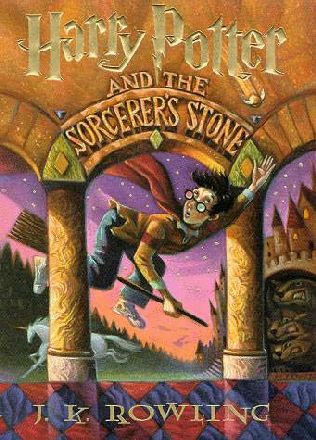
Tricia started it all about a year ago when she read the first (Harry Potter and the Chamber of Secrets) and second (Harry Potter and the Sorceror's Stone) books to Harper and Muluken. I had already read the first book years ago during my first year teaching. Although I loved the book I resisted reading more due to the overwhelming popularity the young series was enjoying. It became a craze that I didn't care to become a part of.
However, after more than ten years the opportunity arose to give it a second chance - Harper and Muluken wanted me to read them the third book (Harry Potter and the Prisoner of Azkaban). Trying to read aloud a 448-page book half an hour at a time is a rather slow process. It seemed to take months but, in reality, probably took five or six weeks.
When summer rolled around we all made a trip to the library to pick up four copies of the fourth book (Harry Potter and the Goblet of Fire). The four of us read separately and together, as well as listened to a significant portion while in the van on vacation. Ainsley put in her earphones when the story became too dark or scary and Ty even cried near the end. We figured out not to listen too close to bedtime. By the time we returned from vacation there were only a few chapters left to read and everyone finished nearly as soon as we got home.
Muluken and I then went to the library to get the fifth book (Harry Potter and the Order of the Phoenix). At 870 pages it felt as though we were carrying around dictionaries. Still, we each finished it within a couple of weeks. There were days when Muluken spent three or four hours reading. I remember seeing him sit and read as those around him played video games, watched television, and threw toy airplanes. Certainly there's far more to life than reading a book but I have to admit that it was awfully fun to see him so engrossed.
It would have been nice to discuss the book but it seemed as though we were forever a hundred pages ahead or behind one another and fearful of learning something we shouldn't know yet. We both finished on the same night - staying up later than we probably should have - and were excited to finally talk freely about favorite parts the next morning.
Around this time we returned home from another of our summer trips and went back to the library for the sixth book (Harry Potter and the Half Blood Prince). We were taking our final trip of the summer (the Appalachian Trail hike) and used our time in the van to push toward that inevitable end - the final book. If we could have fit the massive books into our backpacks during the hike I'm sure we would have. Once home we dug back in and finished the book within a week. Muluken was now reading for about two hours every night before bed and then waking up and reading another hour or so before coming down for breakfast. I struggled to keep up. I found that with preparations for the quickly approaching school year I had to steal as many small moments for reading as I could. While brushing my teeth. While eating lunch. While waiting for the kids to get their shoes on to go somewhere. Soon we had finished and I wondered if we might just take a break.
The next day I was told that Tricia had requested the seventh book for Muluken (Harry Potter and the Deathly Hallows). I was hesitant to begin the book because school was starting, I had a graduate course set to begin, and there were a number of teaching texts I wanted to read. Time for recreational reading (beyond the newspaper and blogs) was scarce. Still, I couldn't see coming all this way - four books in four-and-a-half months, and then letting Muluken finish alone. So I started to read from Muluken's book after he had fallen asleep. Realizing there was no way I was going to keep up, I checked out my own copy from our school library last Friday. How in the world we were able to finish the book in these past seven days I do not know but I can say that the mere fact we wanted to is quite a credit to JK Rowling. Every chapter, every page made you feel as though you were mere moments from finding some secret or clue. You felt as though you were just a paragraph or two from a crucial confrontation. There was a night or two when Tricia fell asleep and I kept telling myself "Just one more chapter!"
While I would not say that Harry Potter is the best children's book(s) of all time I'm more than comforable stating that it's the most important. Thousands upon thousands of kids have learned to love reading because of Harry Potter - many of whom were not ready for such a challenging text but, driven by the engaging story and characters, persevered so that they too could find out how it would all turn out.
Muluken was not ready for this challenging of a text. Not completely. He knew all the names and understood the majority of the storyline. He made predictions as to what he thought would happen next and developed a strong affection, as well as hatred, for certain characters. Still, the vocabulary was tough and there were many parts where he failed to pick up on smaller storylines. He missed the meaning of a few parts. But this I know...it was worth every minute, every page he spent reading because he loved it. And because we were able to share it together.
I don't know that there will be another series that can so deeply consume the both of us - that will bring us together in this unique way. Time will tell. But in the meantime I can be thankful for Harry Potter. Because despite trips to the Virginia highlands and St. Louis, fifty miles on the Appalachian Trail, and a wonderful birthday trip to Lake Jocassee, my most lasting memory of this past summer just might be "The Boy Who Lived" and how he was able to weave an entire summer together for us.
Sunday, August 15, 2010
Home Repair for Dummies
A few years ago I read this really wonderful book titled Other People's Words. In the book author and researcher Victoria Purcell-Gates spent two years working with an illiterate mother and her struggling son. Her goal was to come to better understand the cycle of illiteracy while helping this family to learn to read and write. Along the way she found that our society, as well as our educational system, often works to exclude the illerate. The parents of this child were unable to use public transportation, read labels on packages when shopping, or even help him with elementary school homework. Throw in the bulging sack of stereotypes this family, and especially their son, had to overcome at school and it was easy to see that the deck was stacked to all but ensure failure.
But this young boy was not alone. There were many, many more filling the seats of area classrooms. Together they comprised the group that consistently ranks lowest in terms of national education norms, have higher drop out and absence rates, and more commonly experience learning problems. Who are they? They are white, urban Appalachian children.
Over her two years Gates learned a lot. First, she learned that these families were not illiterate. Rather, they were low-literate. They relied heavily upon oral communication. Their heritage was rooted in oral stories and communication- to such a degree that print often had little use and and was of little importance. To help these children meant to first overcome cultural elitism and work to better understand the kids and their families.
One of the many things that Gates came to understand about these families was that while they struggled with print they were incredibly proficient in a variety of other areas. While their vast knowledge fell outside of what modern society seems to value most - being "book" smart or having a specialized area of expertise- they had learned the skills that were most valued within their culture; the skills that helped them to survive. For instance, they did not need to call a plumber to fix a leaky pipe, an electrician to install or repair wiring, or a mechanic to change the oil pan gasket. They were self-sufficient.
I thought of this recently when calling the Heating and Cooling guy out to check out our air conditioner. Tricia, the kids, and I had returned from our last trip of the summer to find that the second story AC was not working properly. Although air seemed to be coming out of the registers it definitely was not cold. The temperature on the thermostat rose and rose throughout the day. After topping out in the mid-eighties my mom took her PJs and fled for the comfort of the third floor while our friend, and housemate, Tim did the same, opting for the couch in the living room.
Being as close to immune to hot weather as two people can be, Tricia and I flipped on the overhead fan, threw open our bedroom windows, and found it rather comfortable. Still, despite having to dip into our savings,we were pleased to know that the AC guy would be showing up the next morning and that the unit would be fixed soon.
After a total of fourteen minutes spent looking at the thermostat, playing with the circuit breakers, and looking at the unit on the side of the house, he declared the air conditioner in good working condition again. As he made out the bill I asked him what the problem was. Keeping a straight face, which seems in retrospect that it must have been hard to do, he explained that there was a bad storm while we were gone and that one of the circuit breakers had tripped. As he handed me the bill I looked down and saw that I was preparing to pay in excess of $100 so that he could walk into the garage and flip a switch back to the "on" position.
I'd like to say this was my first time paying for a ridiculously easy fix. Heck, I'd like to say it was the first time I had paid someone to flip a circuit breaker back on. But it wasn't.
And I ask myself...should we, as a society, redefine smart?
But this young boy was not alone. There were many, many more filling the seats of area classrooms. Together they comprised the group that consistently ranks lowest in terms of national education norms, have higher drop out and absence rates, and more commonly experience learning problems. Who are they? They are white, urban Appalachian children.
Over her two years Gates learned a lot. First, she learned that these families were not illiterate. Rather, they were low-literate. They relied heavily upon oral communication. Their heritage was rooted in oral stories and communication- to such a degree that print often had little use and and was of little importance. To help these children meant to first overcome cultural elitism and work to better understand the kids and their families.
One of the many things that Gates came to understand about these families was that while they struggled with print they were incredibly proficient in a variety of other areas. While their vast knowledge fell outside of what modern society seems to value most - being "book" smart or having a specialized area of expertise- they had learned the skills that were most valued within their culture; the skills that helped them to survive. For instance, they did not need to call a plumber to fix a leaky pipe, an electrician to install or repair wiring, or a mechanic to change the oil pan gasket. They were self-sufficient.
I thought of this recently when calling the Heating and Cooling guy out to check out our air conditioner. Tricia, the kids, and I had returned from our last trip of the summer to find that the second story AC was not working properly. Although air seemed to be coming out of the registers it definitely was not cold. The temperature on the thermostat rose and rose throughout the day. After topping out in the mid-eighties my mom took her PJs and fled for the comfort of the third floor while our friend, and housemate, Tim did the same, opting for the couch in the living room.
Being as close to immune to hot weather as two people can be, Tricia and I flipped on the overhead fan, threw open our bedroom windows, and found it rather comfortable. Still, despite having to dip into our savings,we were pleased to know that the AC guy would be showing up the next morning and that the unit would be fixed soon.
After a total of fourteen minutes spent looking at the thermostat, playing with the circuit breakers, and looking at the unit on the side of the house, he declared the air conditioner in good working condition again. As he made out the bill I asked him what the problem was. Keeping a straight face, which seems in retrospect that it must have been hard to do, he explained that there was a bad storm while we were gone and that one of the circuit breakers had tripped. As he handed me the bill I looked down and saw that I was preparing to pay in excess of $100 so that he could walk into the garage and flip a switch back to the "on" position.
I'd like to say this was my first time paying for a ridiculously easy fix. Heck, I'd like to say it was the first time I had paid someone to flip a circuit breaker back on. But it wasn't.
And I ask myself...should we, as a society, redefine smart?
Monday, August 2, 2010
Technology Rant
Tricia has lost her cell phone. After weeks now of waiting for it to show up somewhere I finally decided to give her mine. While this might seem a selfless act it is anything but. It was a pleasure to give it up. Anyone who knows me knows that I’m not much for technological gadgets. Plasma TVs, Blackberries, Bluetooth, Skypes. I only know what one of these things actually is. And I like it that way.
I’m a bit disappointed that my brief ownership of a cell phone will forever serve as a blemish on what could have otherwise been a perfect record – a lifetime of NOT being available at the drop of a hat.
A few years ago I read this really great book titled Better Off: Flipping the Switch on Technology (Two People, One Year, Zero Watts). In the book the author Eric Mende, a graduate of MIT, wrote about his concerns that he, as well as society as a whole, had become addicted to technology. He wondered whether the very machines that have been designed to save us time actually do just the opposite.
I’m sure this is true. I would bet that if there were a study conducted to show the relationship between internet speed (dial up, DSL, cable) and time spent at the computer you would find that the faster the internet connection (a supposed opportunity to save time) the more time spent in front of the screen. Rather than saving time at the computer we are lured into sitting and staring even longer.
So, are things actually better when they’re slower and more laborious?
Mende was determined to find out. He and his new bride found a small religious community (Mennonites most likely) who would take him in as an outsider amongst them for a year and a half. The Mennonites, in case you are unaware, make the Amish look like something out of a science fiction movie.
So during his “simple life” experience, Mende looked to see for himself the pros and cons of a life without technology of any kind. His days were spent planting, weeding, milking, feeding, building, and mending. He worked from before sunrise each morning to after sunset each evening. It was hard. But he found that the best conversations he and his wife had took place when working alongside one another. There was no need for a gym membership because everyday life provided opportunity after opportunity to walk (no cars, although there was a horse and buggy for longer trips) and labor.
The kids in the community helped out as well. There were always a number of tasks for them to tackle and when they weren’t working they were running around the fields and barns playing. No television, no video games and, yet, no “I’m bored.” They learned how to entertain themselves rather than becoming dependent on the glare of a screen to do it for them. Certainly, they thought more and read more and imagined more. There’s already plenty of research out there showing the relationship between screen time and attention span and imaginative play. The results are far from surprising.
The experience wasn’t perfect, though. It got awfully hot in the summer without air conditioning. And as his wife became pregnant and neared her due date she worried about the possibility of complications and how well equipped the midwife would be able to handle these. And after a lifetime of what they had come to accept as normal life there were a lot of change to adjust to quickly. So after twelve months, six months shy of their intended exit, they left the community and came back to “civilization.”
However, they came back changed. Living in St. Louis, they still walk as often as they can rather than jump into a car for a ten or fifteen minute drive. When they can’t drive they hop on their bicycles. They do their wash the old-fashioned way . To supplement their small garden they walk to the farmer’s market (one of the largest open air markets in the country and just minutes from their front door). All chores are done as a family, alongside one another, and they figure they spend far more time each day talking with their kids than do the vast majority of families today.
While I harbor no dreams that I would like to return to the 1800s and their ways I do think there is something to be learned from that kind of life. I appreciate the convenience of a trip to Target and finding quick information on the internet. I’m thankful for new drugs, life-saving medical procedures, and elevators that can get me to the fifth floor in a snap. But I know, too, that sometimes it’s okay to take the stairs.
It’s with my tongue firmly planted in my cheek that I say I hate technology. I don’t at all. I just think maybe we should be a little more careful at times to think about the effects it has on us. I hate seeing people texting while they drive. And in a movie theater. And while I’m talking to them. I hate seeing children needing to watch DVDs during a twenty minute drive down the road. I hate seeing that there are tours of beautiful caverns that utilize heavy doses of elaborate light shows and hidden speakers when just the cavern itself should be enough to leave us is awe. I hate seeing teachers use SmartBoards to show videos of the natural world without ever taking their kids out into it.
So maybe it’s not the technology itself that I hate. It’s the way we abuse it.
Monday, May 31, 2010
For Tricia
There are many non-verbal ways to tell someone how much they mean to you. You could do something special for them, write a nice letter, or get them a small personal gift. Writers often do this by dedicating a book to someone they love or to whom they are especially thankful. I recently came across a very interesting book dedication. It read:
For
Mary and Nora
who continue to astonish me
with their resilience, patience, and love.
Such nice words. So what is so surprising about this dedication? I found it just behind the title page of the text Research Methods: The Concise Knowledge Base. I can think of many books of which I'd love to have dedicated to me but I'm not so certain the list would include a research methods textbook. Is it enough just to have dedicated a book? Does the actual book make any difference at all? Would you want to show your wife and daughter just how much they mean to you by dedicating your latest book, The Origins of Nazi Genocide: From Euthenasia to the Final Solution, to them. Just imagine...
To my loving wife and daughter
without whom The Origins of Nazi Genocide would never exist
A few pages beyond the dedication is an About the Author page. This is where we learn that Dr William Trochim, author of the research text, is "a professor in the Department of Policy Analysis and Management at Cornell University, and is a faculty member in the graduate fields of education, human development, and community and rural development. Among experimentalists, he is known for his work in quasi-experimental alternatives to randomized experimental designs, especially the regression discontinuity and regression point displacement designs." At the very bottom of the page it reads "He does all these things for the loves of his life - his spouse Mary and his daughter Nora."
Wow, they must feel so warm and fuzzy inside to know that it is becuase of them that he has "extended the theory of validity through his atriculation and investigation of the idea of pattern matching."
This all really made me wonder what I do for my family to show them how much I love them. I thought maybe I should start making more of an effort. Having seen the light, I decided to plan a hike for Tricia and I to do together. We could share something we both love doing and have some alone time. I found just the hike for us in the Upstate at Jones Gap State Park.
To ease Tricia's mind I failed to mention that the trail we would be hiking was listed at "strenuous." After a three hour drive we showed up around 6pm and still had to hike four miles to our campsite. This was when I found out it was actually rated as "VERY strenuous." I never knew a trail could climb so quickly in such little time. After about fifteen minutes, with heavy packs on our backs, we sounded like a couple of chain-smokers trying to run a marathon. Much to our dismay, we looked down and saw our car only about two or three hundred yards below us.
After a while, though, we adjusted to the terrain and did our best to laugh about it. I promised, many times, that we were now at the top of the mountain. This, of course, was always followed by yet another grueling climb. Two hours and ten pounds of sweat later we were sitting on a fallen tree as the woods began to grow dark. We were more than a bit concerned that we weren't going to find our campsite before we lost all light. The chances of staying on the trail by flashlight didn't seem too promising given that the trail was somewhat difficult to track in daylight. Normally I would have suggested that we could just set up the tent right where we were but there was nothing even remotely resembling level ground anywhere near us.
So we trudged on. And on. And on.
Finally, about eight thirty we came across the campsite. We were very relieved. We quickly set up camp, brushed our teeth, and hopped into our bags. We hadn't eaten dinner (due to some other poor planning on my part) but all was good.
The next morning we woke up early and headed back down, taking another path. While not as tiring, going down was almost as difficult as going up. Still, it was a truly great trail with some amazing views. In our two days we didn't see a single other person until we returned to the park. For hours and hours all we heard was the sound of distant birds and a stream running mostly parallel to our path.
When we finished we were exhausted but quite happy. This had been no simple stroll through the woods. We felt as though we had really accomplished something. And Tricia wasn't even mad that I hadn't mentioned to her how hard it was going to be. She knows I love her. And I don't even have to "develop a multivariate form of structured conceptual mapping" to remind her.
For
Mary and Nora
who continue to astonish me
with their resilience, patience, and love.
Such nice words. So what is so surprising about this dedication? I found it just behind the title page of the text Research Methods: The Concise Knowledge Base. I can think of many books of which I'd love to have dedicated to me but I'm not so certain the list would include a research methods textbook. Is it enough just to have dedicated a book? Does the actual book make any difference at all? Would you want to show your wife and daughter just how much they mean to you by dedicating your latest book, The Origins of Nazi Genocide: From Euthenasia to the Final Solution, to them. Just imagine...
To my loving wife and daughter
without whom The Origins of Nazi Genocide would never exist
A few pages beyond the dedication is an About the Author page. This is where we learn that Dr William Trochim, author of the research text, is "a professor in the Department of Policy Analysis and Management at Cornell University, and is a faculty member in the graduate fields of education, human development, and community and rural development. Among experimentalists, he is known for his work in quasi-experimental alternatives to randomized experimental designs, especially the regression discontinuity and regression point displacement designs." At the very bottom of the page it reads "He does all these things for the loves of his life - his spouse Mary and his daughter Nora."
Wow, they must feel so warm and fuzzy inside to know that it is becuase of them that he has "extended the theory of validity through his atriculation and investigation of the idea of pattern matching."
This all really made me wonder what I do for my family to show them how much I love them. I thought maybe I should start making more of an effort. Having seen the light, I decided to plan a hike for Tricia and I to do together. We could share something we both love doing and have some alone time. I found just the hike for us in the Upstate at Jones Gap State Park.
To ease Tricia's mind I failed to mention that the trail we would be hiking was listed at "strenuous." After a three hour drive we showed up around 6pm and still had to hike four miles to our campsite. This was when I found out it was actually rated as "VERY strenuous." I never knew a trail could climb so quickly in such little time. After about fifteen minutes, with heavy packs on our backs, we sounded like a couple of chain-smokers trying to run a marathon. Much to our dismay, we looked down and saw our car only about two or three hundred yards below us.
After a while, though, we adjusted to the terrain and did our best to laugh about it. I promised, many times, that we were now at the top of the mountain. This, of course, was always followed by yet another grueling climb. Two hours and ten pounds of sweat later we were sitting on a fallen tree as the woods began to grow dark. We were more than a bit concerned that we weren't going to find our campsite before we lost all light. The chances of staying on the trail by flashlight didn't seem too promising given that the trail was somewhat difficult to track in daylight. Normally I would have suggested that we could just set up the tent right where we were but there was nothing even remotely resembling level ground anywhere near us.
So we trudged on. And on. And on.
Finally, about eight thirty we came across the campsite. We were very relieved. We quickly set up camp, brushed our teeth, and hopped into our bags. We hadn't eaten dinner (due to some other poor planning on my part) but all was good.
The next morning we woke up early and headed back down, taking another path. While not as tiring, going down was almost as difficult as going up. Still, it was a truly great trail with some amazing views. In our two days we didn't see a single other person until we returned to the park. For hours and hours all we heard was the sound of distant birds and a stream running mostly parallel to our path.
When we finished we were exhausted but quite happy. This had been no simple stroll through the woods. We felt as though we had really accomplished something. And Tricia wasn't even mad that I hadn't mentioned to her how hard it was going to be. She knows I love her. And I don't even have to "develop a multivariate form of structured conceptual mapping" to remind her.
Subscribe to:
Comments (Atom)